

Modular Theatre Headdress with Paste Stones and Pearls


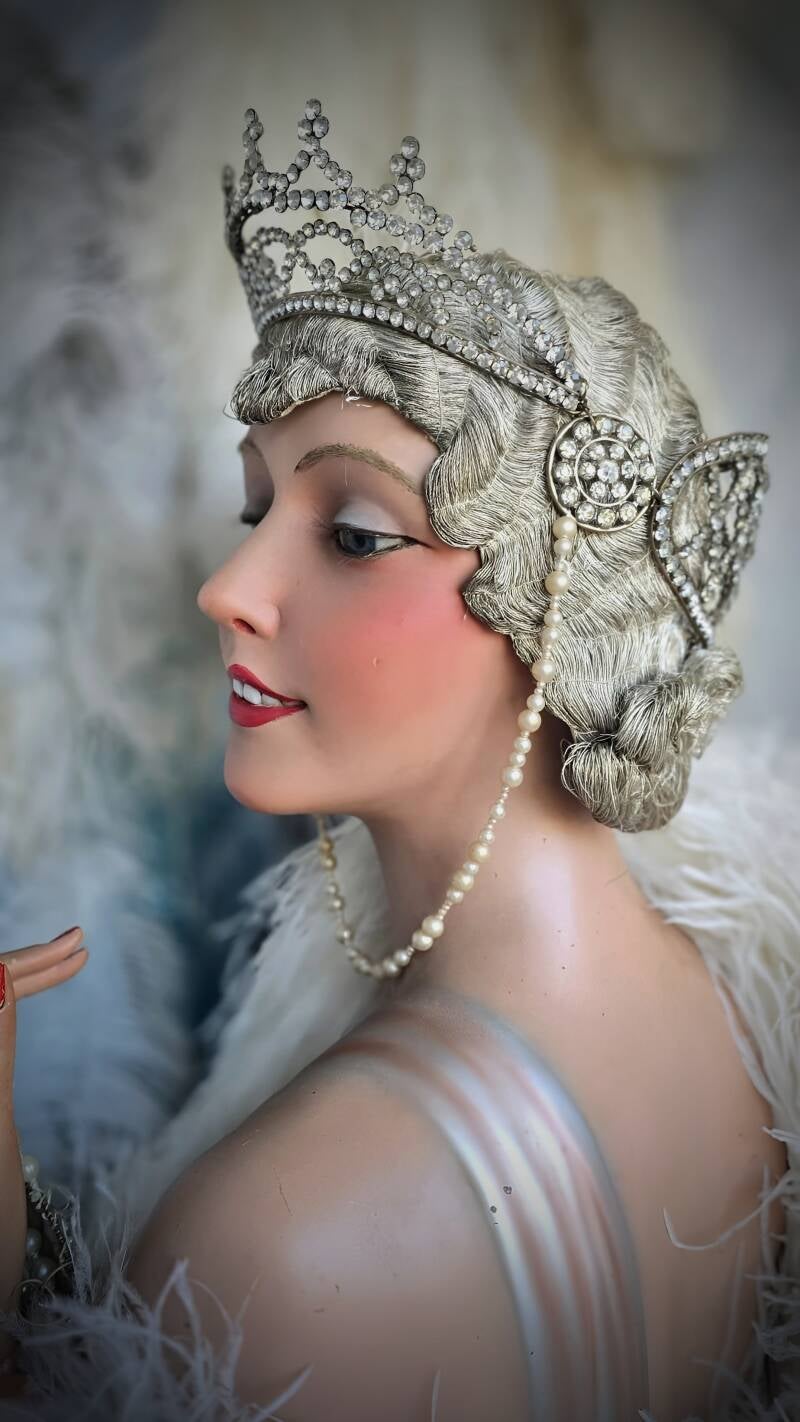

Modular Theatre Headdress with Paste Stones and Pearls
France, circa 1880–1910
In the closing decades of the 19th century, the theatre became a realm of spectacle in which costume, light, and illusion merged into a single art form. Among the most captivating elements of this visual language were elaborate headdresses—designed not merely to adorn, but to transform.
This remarkable headdress belongs to that tradition.
Composed of multiple articulated elements, it reflects a sophisticated approach to stage adornment. Individual components—set with shimmering paste stones and delicate pearl drops—are linked together, allowing the piece to be adjusted and worn in various ways. It could be arranged to crown the head, frame the face, or extend toward the nape, adapting to both hairstyle and role. Such versatility was essential in the theatre, where a single ornament might serve several costumes or characters.
The surviving photographic record offers rare glimpses into how similar headdresses were worn. Actresses of the Belle Époque—among them Sarah Bernhardt and Caroline-Eugénie Segond-Weber—appear adorned with comparable constructions: asymmetrical compositions of jewels and draped elements that seem almost to grow organically from the hair. No two examples are identical, each reflecting the individuality of both wearer and atelier.
Time has rendered these objects exceedingly rare. Created for performance rather than permanence, most were fragile constructions, subject to constant use, alteration, and eventual loss. The survival of a piece such as this is therefore exceptional. Signs of wear and historic repair bear witness to its life on stage—quiet traces of performances long vanished.
Today, such headdresses reside primarily in museum collections or in the hands of dedicated collectors. To encounter one outside these contexts is increasingly uncommon.
This example, with its adaptable structure and theatrical presence, stands as a testament to an era when adornment was inseparable from performance—when a headdress was not merely worn, but inhabited.