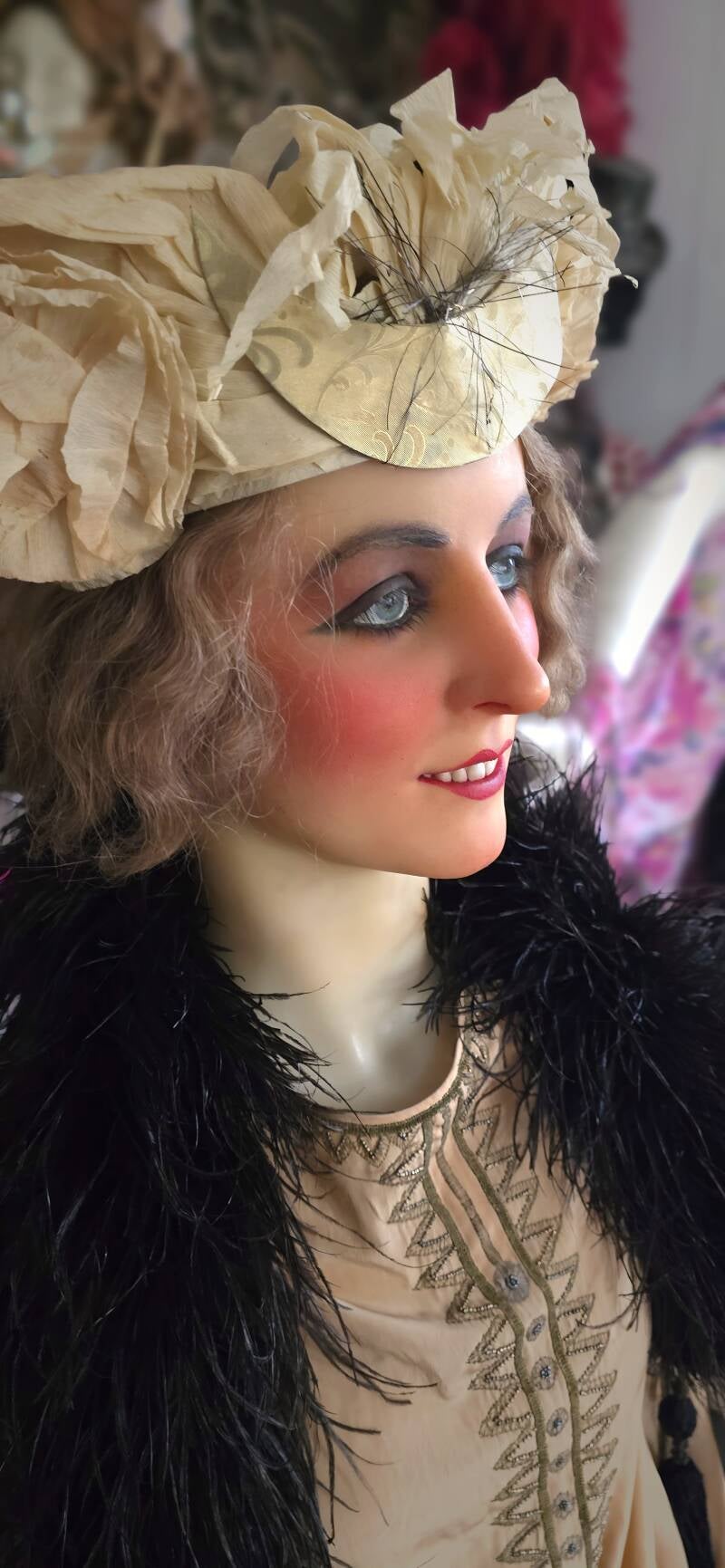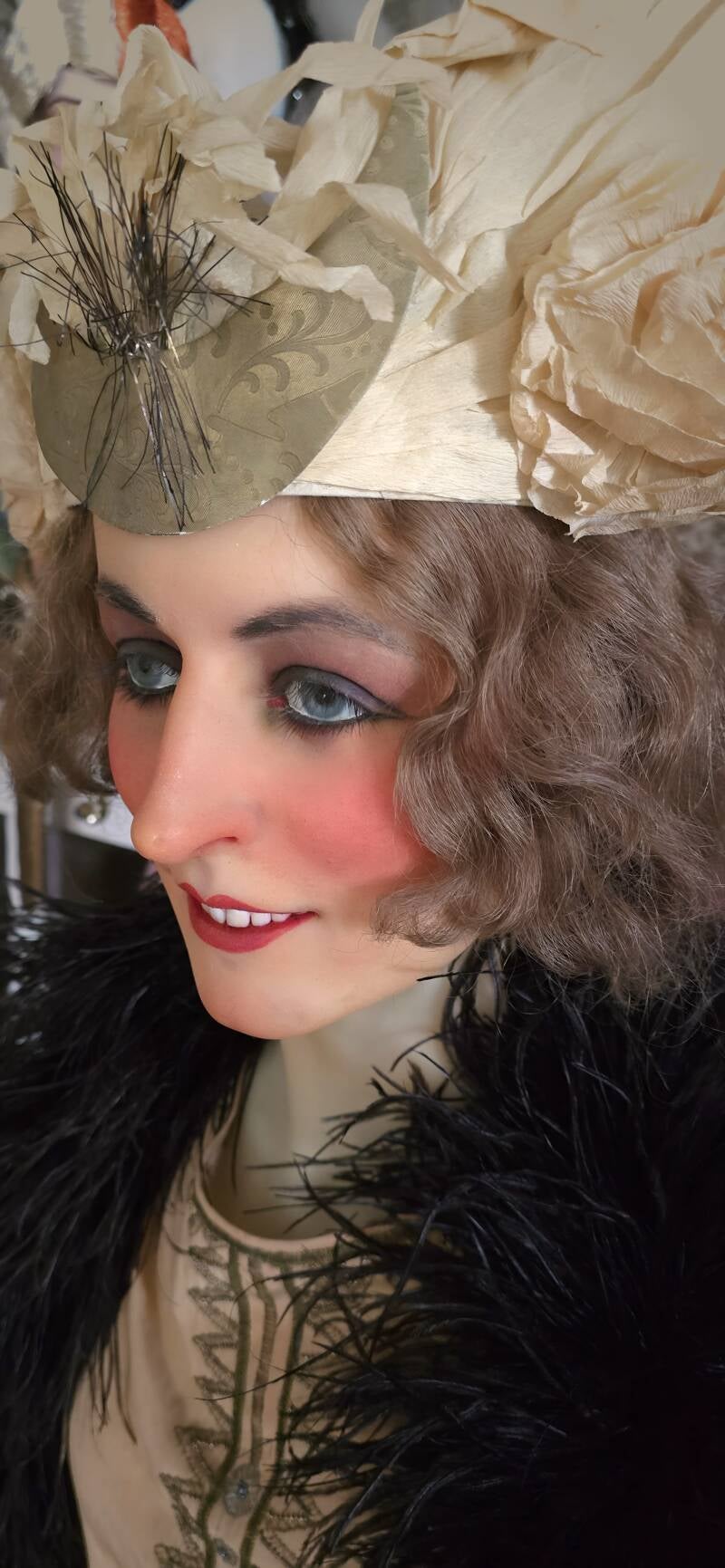

Exceedingly Rare 1900s full-size Seated Wax Mannequin


Description
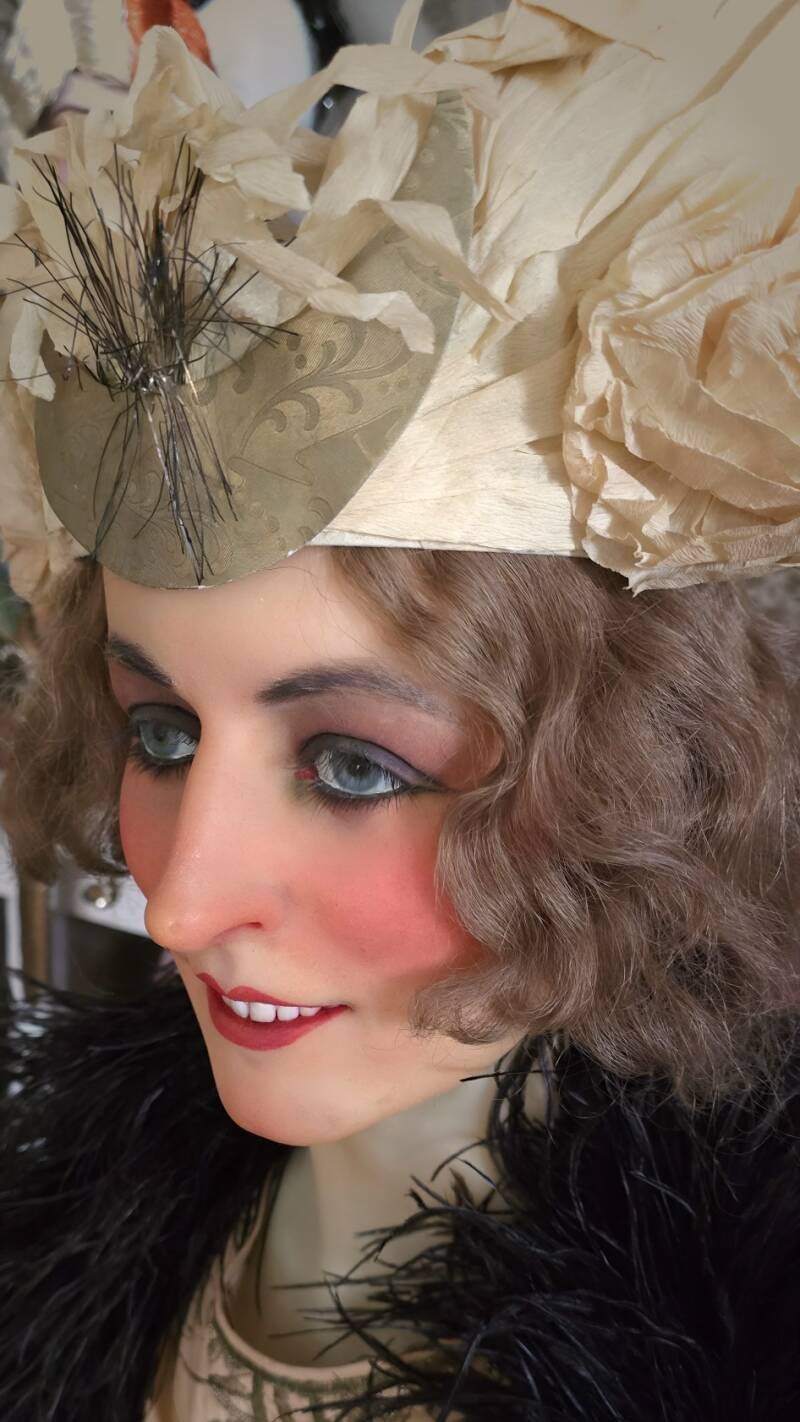
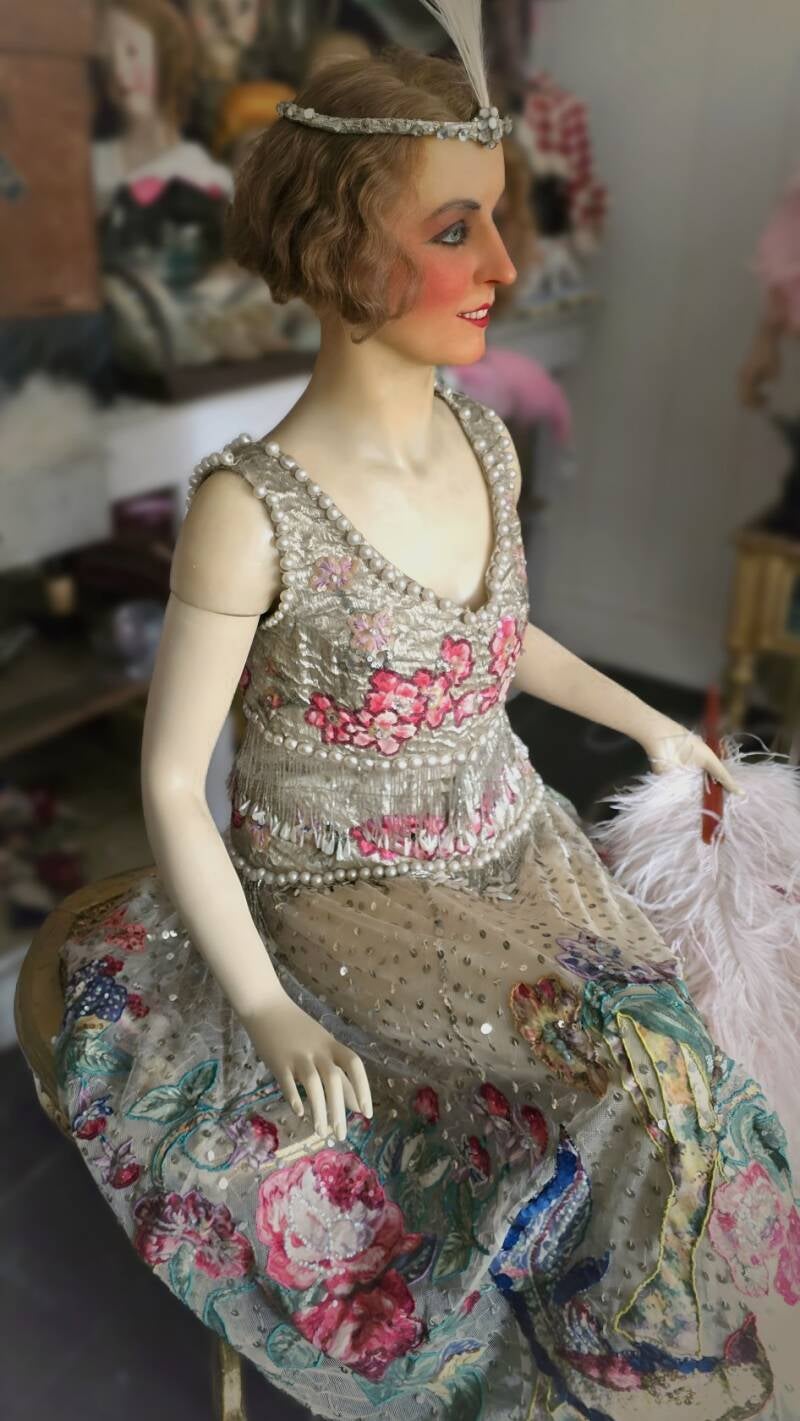
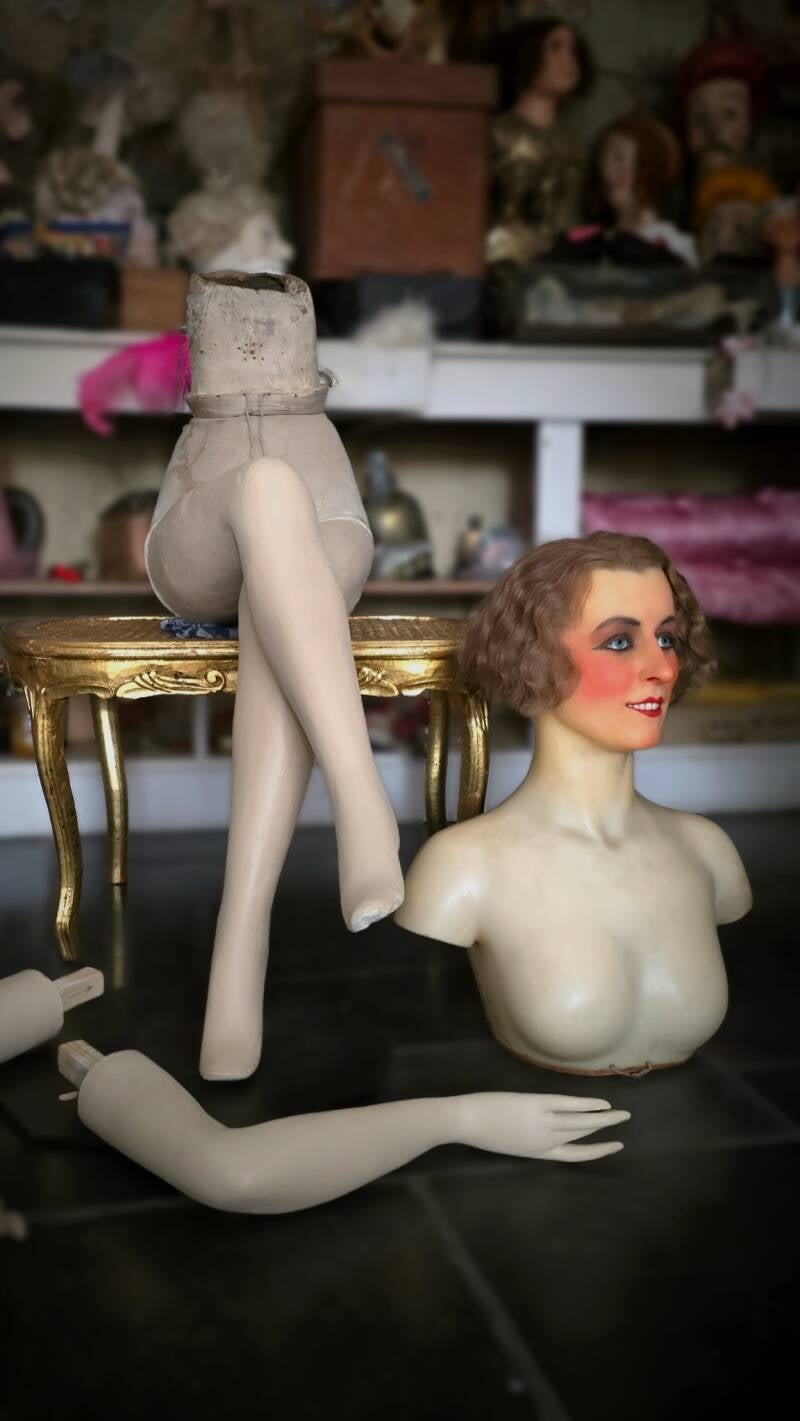
A breathtaking and exceedingly rare full-size seated wax mannequin, created around the early 1900s and preserved with remarkable grace. Seated figures of this period were produced only in very small numbers, making surviving examples extraordinarily hard to find — especially in such complete condition.
Her bust and head are sculpted in delicate, life-like wax, capturing the soft translucency, rosy complexion, and expressive glass eyes that defined the finest French and German mannequin ateliers of the Belle Époque. The hair is styled in the characteristic short wave of the late 1910s–1920s, giving her an irresistible modern charm.
The body is crafted in papier-mâché, carefully shaped to imitate natural posture, with articulated joints and a beautifully modeled torso. Her arms are made from an early composite material typical of turn-of-the-century mannequin production — strong, slightly flexible, and designed to hold poses without strain.
Displayed here in a lavish beaded and embroidered flapper-era stage dress, she radiates the glamour of revues, cabarets, and Parisian theatre dressing rooms. Even undressed, the expert sculpting of her form is clear: elegant shoulders, graceful hands, and the perfectly balanced seated posture that made her ideal for luxury window displays and couture salons.
Seated mannequins of this age almost never surface, as they were expensive to produce, easily damaged, and usually discarded when fashions changed. She is a museum-level survivor — a theatrical character frozen in time.
MUS-043
History
This exceptional figure belongs to the golden age of European wax mannequin artistry, roughly 1900–1925 — a time when department stores, couture houses, and grand theaters invested heavily in elaborate, realistic displays.
Mannequins like her were handmade by skilled sculptors who worked much like portrait artists. Wax busts were carefully tinted with natural pigments, cheeks were warmed with rouge, and glass eyes were hand-set to create an almost living presence. Papier-mâché bodies were lightweight yet strong, allowing mannequins to be positioned in seated or reclining poses for dramatic window tableaux.
Seated models were special commissions. They were used:
-
in haute couture salons, to present delicate garments or lingerie
-
in jewelry and accessories departments
-
in theatrical costume workshops
-
and occasionally on stage as part of scenic decoration
Because they required additional engineering — reinforced hips, carefully balanced weight, custom chairs — only a very small number were made compared to standing mannequins.
Over the decades, most were lost to time, war, humidity, or simple neglect. Few complete examples survive, particularly with an intact wax bust and original early arms.
This figure, with her serene expression and beautifully preserved structure, is not only a mannequin but a piece of theatre and fashion history — a rare witness to the artistry, elegance, and craftsmanship of the early 20th century.