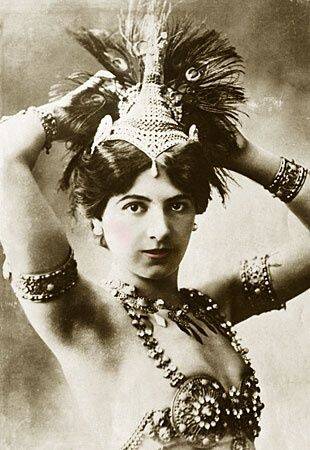

Late 19th Century " Mata Hari" Stage Headdress


✨ Description
Among the crown jewels of theatrical adornment, this dazzling stage headdress stands out as a true masterpiece of fantasy and craftsmanship. Dating from around 1880 (or even earlier), it is composed of hundreds of shimmering paste stones in soft pastel tones of turquoise, pink, and crystal white, all set into intricate gilded metalwork.
Its construction is complex and layered: a diadem-like band graces the forehead, while an open, domed crown rises dramatically above, culminating in a filigree finial of almost architectural elegance. On either side of the face, floral sprays of rhinestones drape gracefully over the ears, with dangling strands that would have glittered brilliantly under the gaslights of the stage.
This is not a modest accessory—it was designed to command attention, to catch every flicker of light, and to transform the performer into a living spectacle. The artistry and survival of this piece make it an exceptionally rare survivor of 19th-century theatrical glamour.
🌟 History
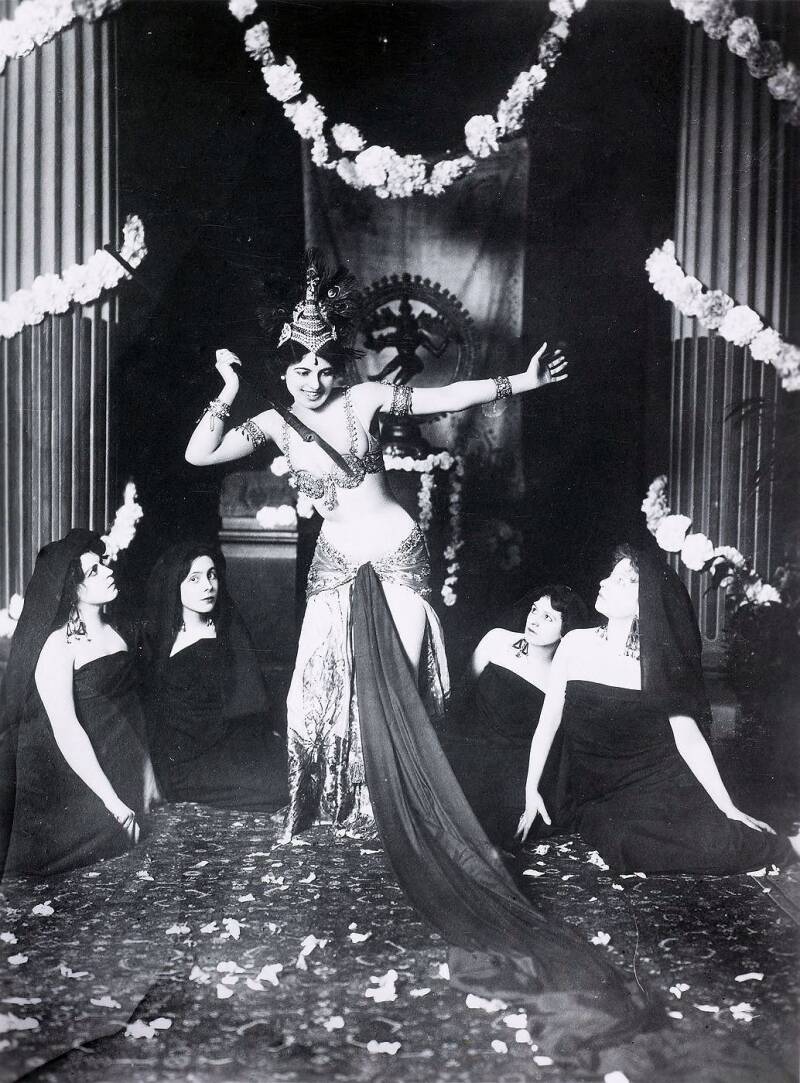
The late 19th and early 20th centuries were a golden age of stage extravagance. Actresses and dancers such as Sarah Bernhardt, Cléo de Mérode, Theda Bara, and the infamous Mata Hari captivated audiences not only with their performances but also with their spectacular costumes. Theaters and cabarets competed to outshine one another with ever more dazzling creations—headdresses like this one were essential tools of seduction, spectacle, and stardom.
This particular style—combining architectural forms, floral ornamentation, and cascades of rhinestones—echoes both Belle Époque romanticism and Orientalist fantasy, popular themes in Parisian and European theaters at the time. It would have been worn with a revealing costume, designed to shimmer in the spotlight and cast an almost hypnotic spell on the audience.
When we gaze at this extraordinary survivor today, we can imagine it once gracing the head of a celebrated actress or dancer, sparkling under the gaslight, every jewel alive with fire. It is a rare glimpse into a vanished world of theater, spectacle, and the eternal pursuit of enchantment.
MUS-026