
Pierre Imans building plaque / atelier


Description
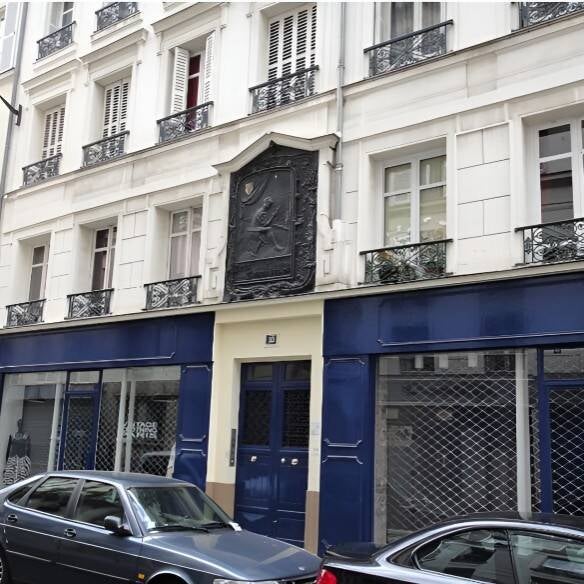
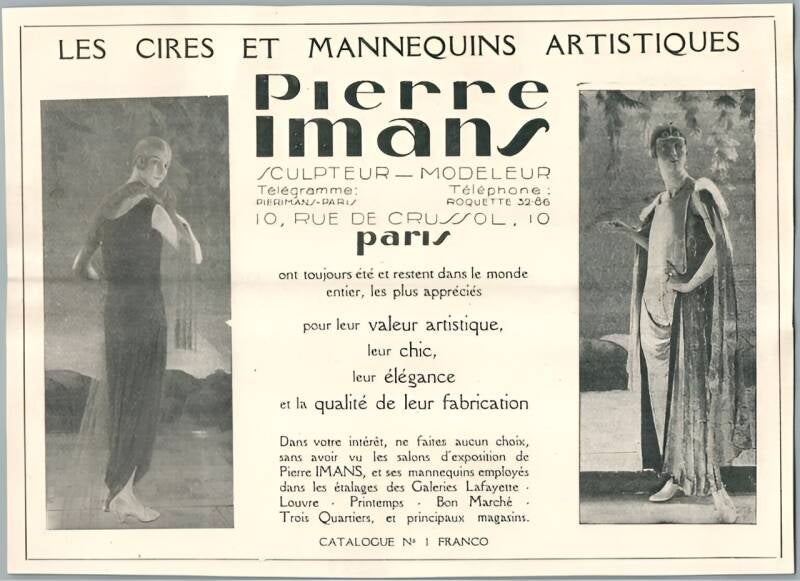
This rare atelier tablet once hung inside the historic workshop of Pierre Imans at 10, Rue Crussol, Paris, the legendary address where some of the world’s most exquisite wax mannequins were created.
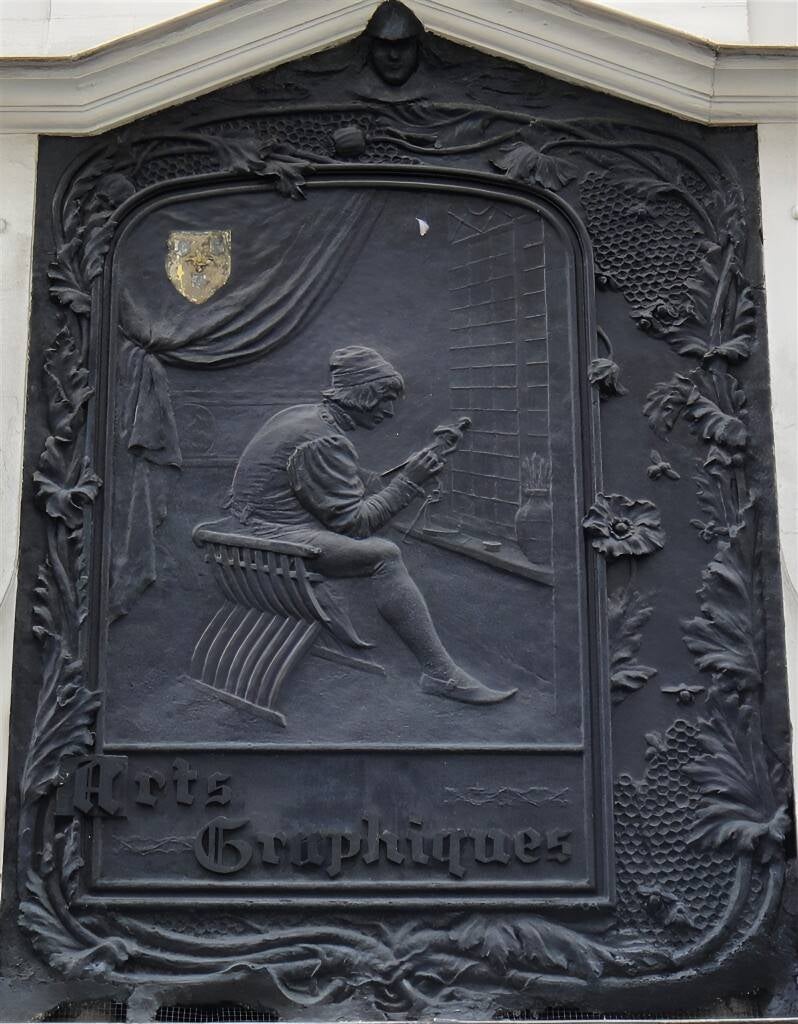
Crafted in plaster and richly sculpted in deep relief, it depicts an artist at his workbench, carving by lamplight — a romantic tribute to the intimate, painstaking craft behind Imans’ famed figures. The border blooms with carved grapes and foliage, symbols of artistic abundance and the flourishing creativity of Paris during the Belle Époque.
Unlike the monumental black exterior plaque that still adorns the façade of the building today, this tablet served inside the atelier, greeting clients, couturiers, theatre costumiers, and department-store buyers who came to commission wax beauties for their salons and grand vitrines.
With its soft patina, age-cracks, and traces of workshop life, it is a surviving witness to the inner world of Pierre Imans — where sculptors, wig makers, glass-eye specialists and fashion artisans collaborated to bring Parisian fantasies to life.
History
At the dawn of modern display culture, Pierre Imans was the undisputed master of the Paris mannequin. From the late 19th century through the Art Nouveau and Art Deco eras, his wax figures graced the windows of Galeries Lafayette, Le Bon Marché, Printemps, La Samaritaine, and even exhibitions at the Louvre.
Inside the atelier at Rue Crussol, Imans’ artists sculpted remarkably lifelike mannequins — with glass eyes, real human hair, and couture-quality garments. Their wax figures embodied both fashion and illusion, inspiring wonder in a world before photography and neon stole the stage.
While the large cast-iron plaque with the sculptor motif still remains proudly fixed to the building’s exterior — a Parisian landmark — tablets such as this interior studio piece are almost never seen outside archives or museum holdings.
This example, preserved from within the original atelier, is a relic not only of a building, but of a vanished artistic tradition — when mannequins were not industrial objects, but sculpted masterpieces, each touched by human hands and lit by Parisian imagination.
MUS-039