
19th C. Victorian High Ankle Boots


🖋️ Description
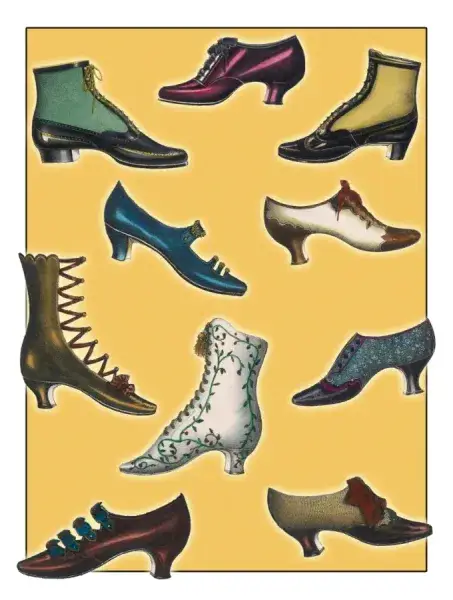
A pair of Victorian high-button ankle boots made from deep emerald-green silk satin with black silk velvet vamps and leather soles.
The uppers feature a fine side-button or lace closure with delicate satin ribbon and metallic eyelets—typical of the transitional period when buttoning replaced lacing for women’s boots.
At the toe, they are decorated with small rosettes and clusters of metallic thread or silver passementerie, a detail seen in evening and promenade footwear from the 1870s.
The heels are small, curved Louis or “Cuban” heels, covered in black leather, suggesting use for formal wear or theatre costume, rather than outdoor walking.
Their striking green color and fragile materials—silk, satin, and velvet—indicate that these were “parlor” or “boudoir” boots, possibly part of a ball gown ensemble, worn indoors or on special occasions
MUS-035
🕰️ History
-
Circa 1870–1885
-
During this period, women’s boots evolved from the earlier flat-soled gaiters of the 1850s into more structured, high-ankle designs with a small heel and pointed toe.
-
Silk and velvet examples were reserved for wealthy clientele, often ordered from prestigious Parisian makers like Hellstern & Sons, Pinet, or Lotz Frères, and were commonly worn in combination with silk gowns and matching accessories.
-
Green silk, in particular, became fashionable after the introduction of aniline dyes in the 1860s, offering rich jewel tones like emerald and peacock green that had previously been difficult to achieve.