

Rare 1920s Flapper Evening Wig – A Vision in Pink
A truly enchanting and exceptionally rare 1920s evening wig, capturing the glamour and theatrical elegance of the Roaring Twenties.
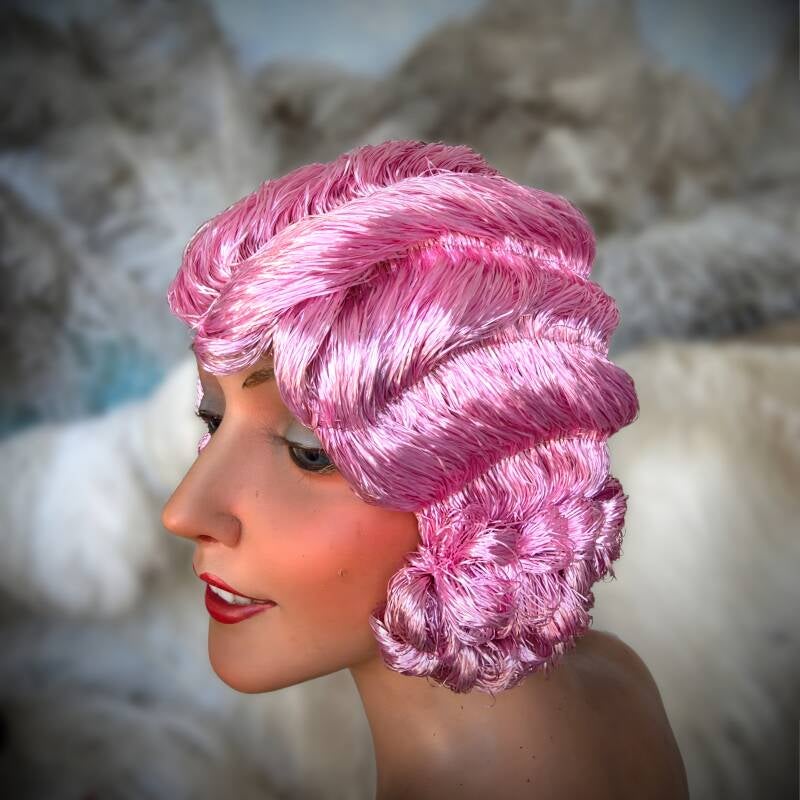
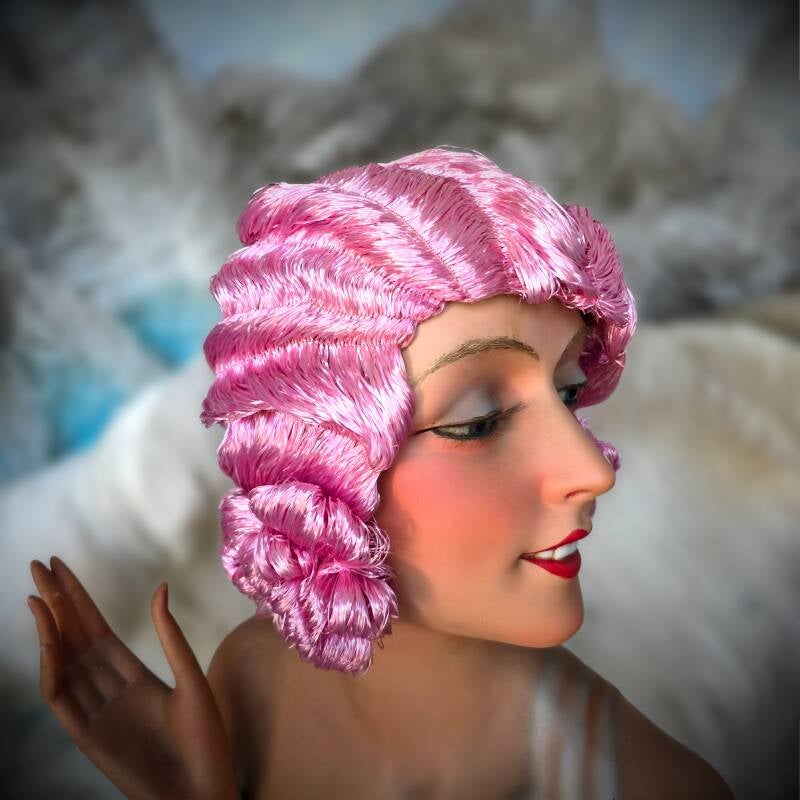
What immediately sets this piece apart is its extraordinary color—a luminous, soft pink tone that is seldom encountered. Wigs from this period were typically produced in natural shades or darker theatrical tones; such a vibrant and playful hue makes this example particularly unusual and highly desirable for collectors.
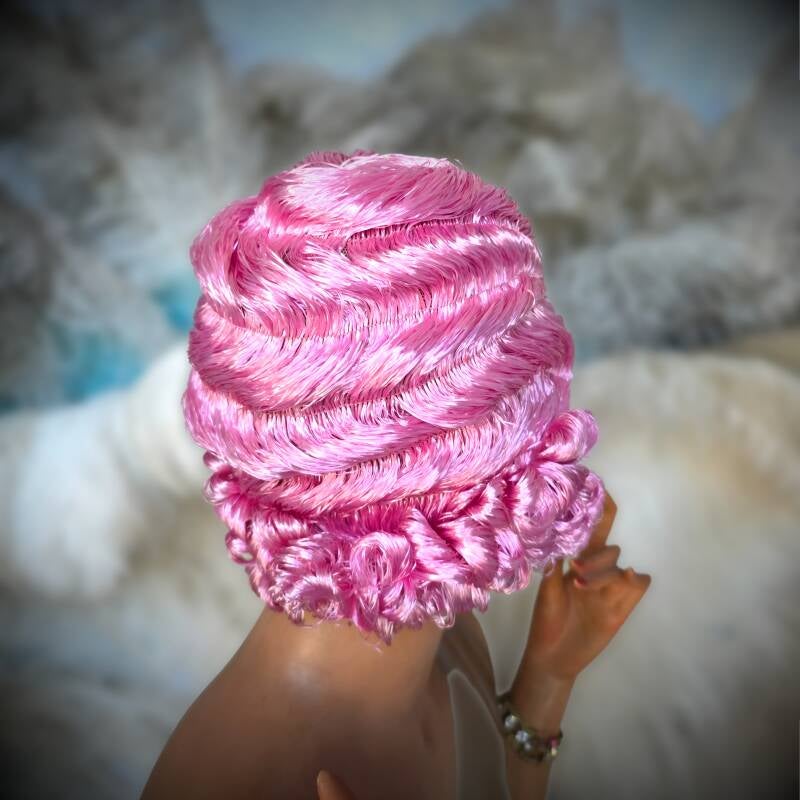
The wig is beautifully styled in the iconic finger-wave fashion of the flapper era, with sculpted waves and delicately formed side rolls framing the face. Crafted from early synthetic or treated fibers, it retains its shape remarkably well—likely finished with period lacquer techniques to maintain its elegant form.
Even more remarkable is its condition. Surviving examples of these evening wigs are rare in themselves, but to find one so well preserved, with its structure and sheen still intact, is exceptional.
The History of Flapper Evening Wigs
During the 1920s, wigs such as this were an essential part of evening wear and theatrical costume. Worn at soirées, cabaret performances, and high-society events, they allowed women to transform their appearance instantly—embracing the bold, modern spirit of the flapper.
These wigs were often used to achieve the fashionable short bob and wave styles without cutting one’s own hair, or to create dramatic looks for stage and performance. In the world of Parisian revues and grand theaters, brightly colored or stylized wigs added a sense of fantasy and spectacle.
Due to their fragile materials and frequent use, very few have survived, making authentic examples today highly collectible.
A New Arrival in the Collection
We have only just acquired this remarkable piece, and for now it has been placed within our online museum collection.
While not currently offered for sale,
inquiries are always welcome.
Should you have a particular interest, we would be delighted to keep you informed regarding its condition and—if we decide to release it—its availability and price.